Our website is still under construction, more information and features coming soon!


Collaborative Game Design Tool
Co-created with Grant Howitt
Purpose
This method enables diverse groups to design a playable game within three hours. It lowers the threshold for creative participation, strengthens collaborative decision-making, and fosters collective ownership. The tool is particularly effective in mixed-experience groups and inclusive learning environments.
Learning Objectives
Strengthen teamwork and shared decision-making
Encourage democratic participation in creative processes
Develop storytelling, systems thinking and problem-solving skills
Build confidence in participants with little or no prior game design experience
Method Overview
Duration: 3 hours
Group size: 4–6 participants per table
Materials: Modular cards or tiles , paper, pens, prototyping materials
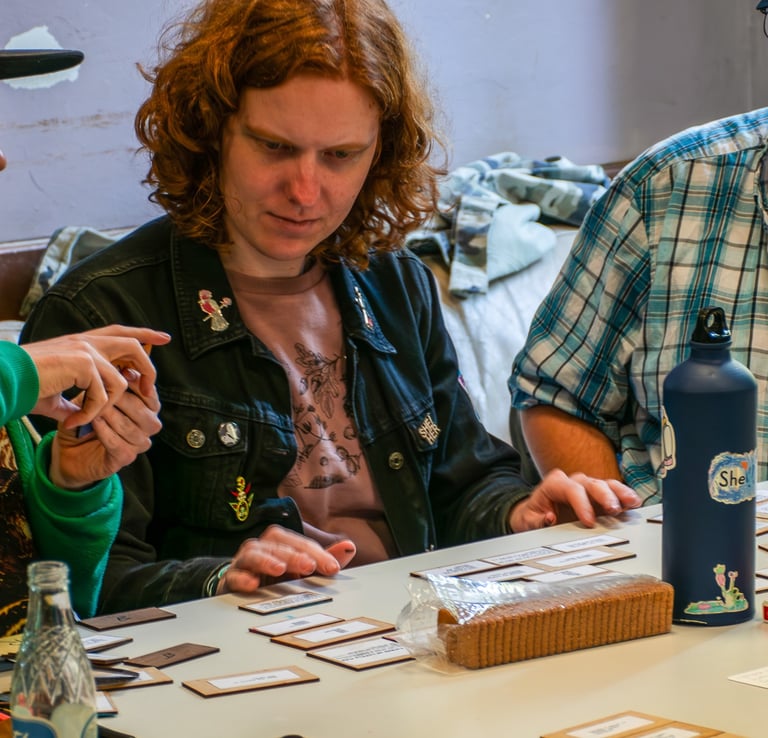
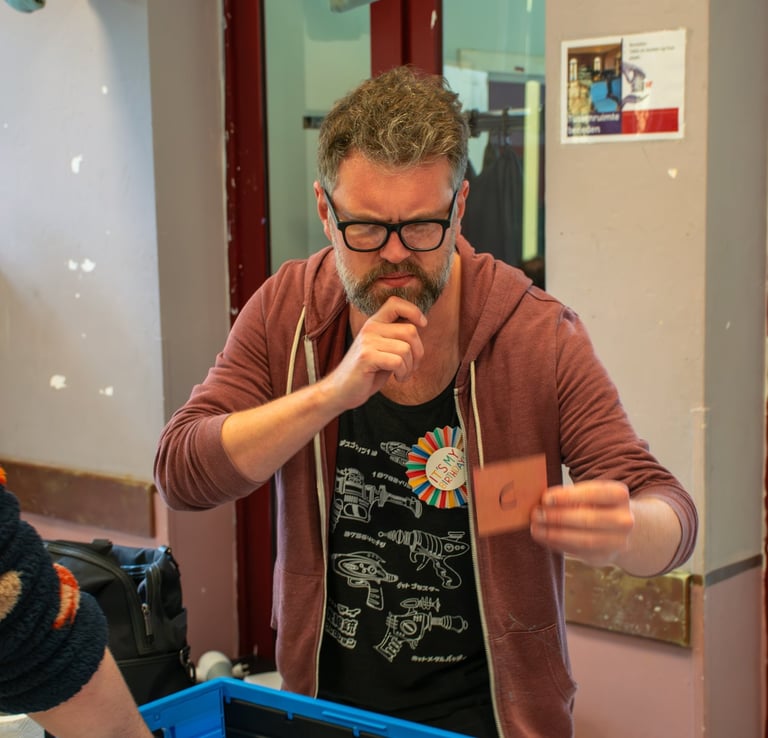
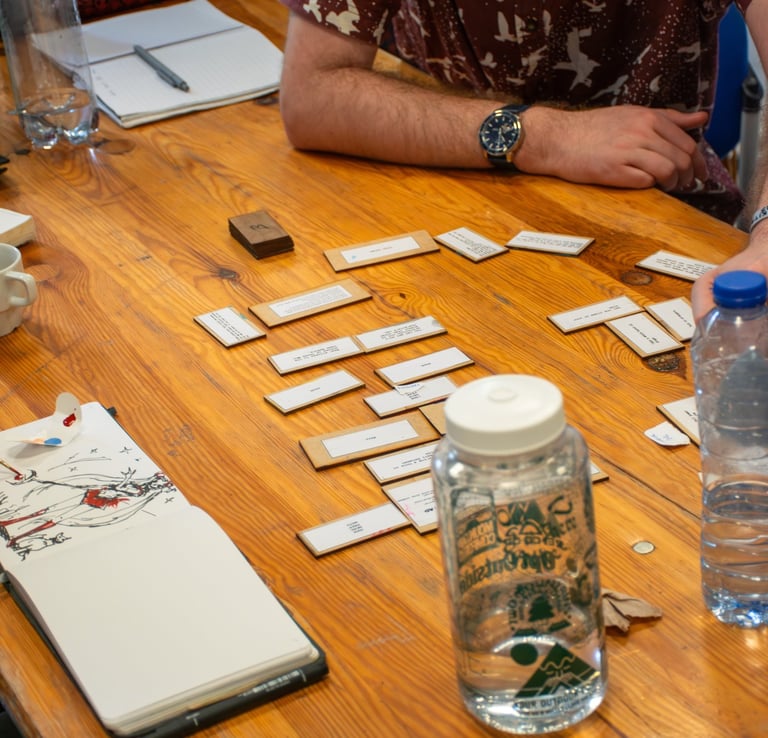
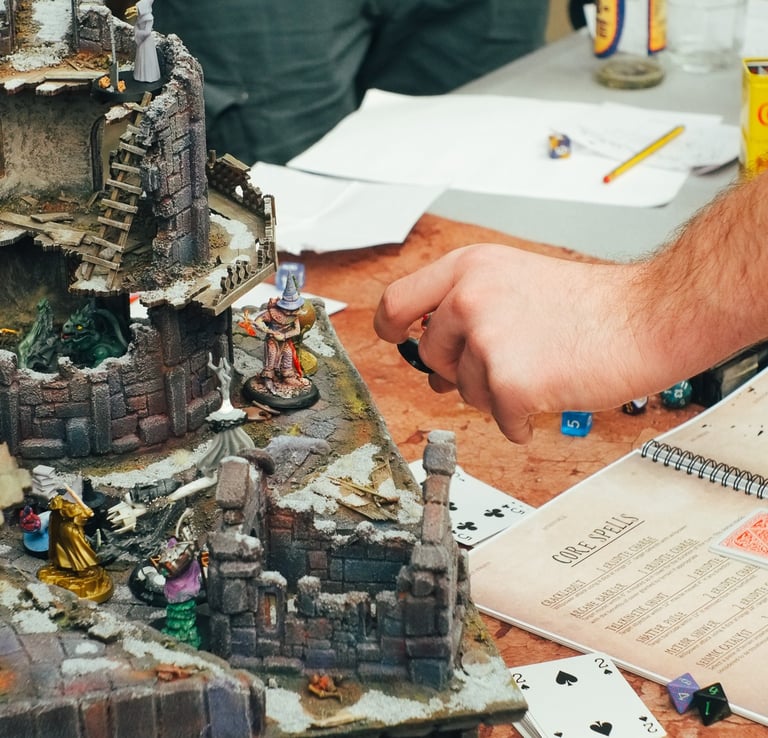
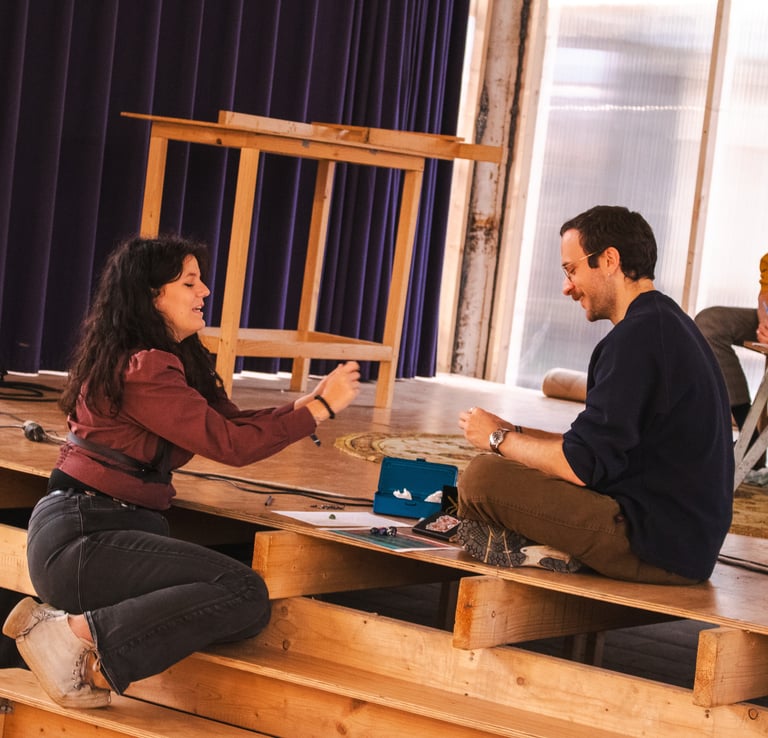
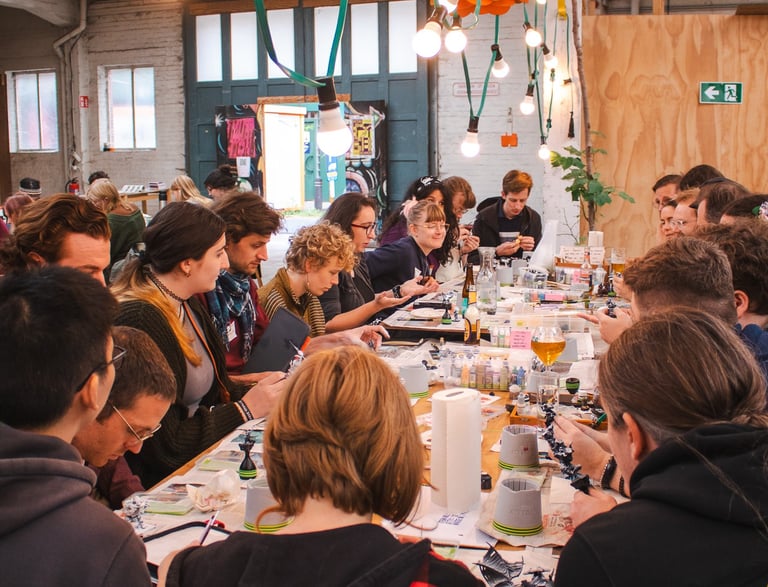
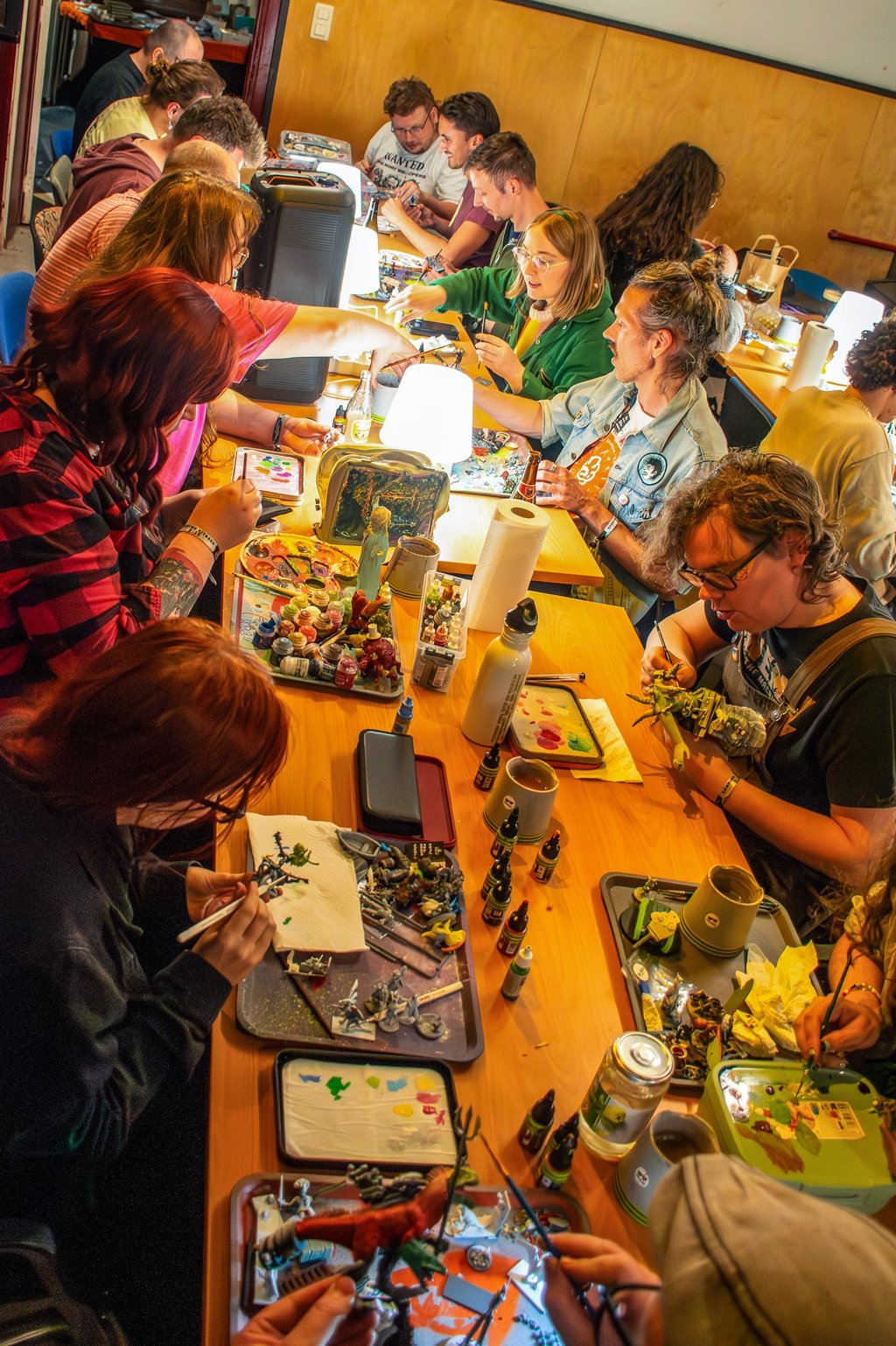
Participants work in small groups. Each group selects a combination of modular tiles/cards (“bits”), which function as structured prompts. Each tile represents a core design element;
At least one set of CHARACTERS (Who the players are)
At least one GOAL (What the characters are doing) and preferably two
Two or more VIBES (What the game should feel like to play)
A CORE MECHANIC (How we determine success or failure)
One set of STATS (How we measure a character’s power)
A few important ACTIONS (How characters can affect the game)
Two or more RESOURCES (Something valuable characters can gain, spend or lose)
As many ABILITIES as you can stomach (How certain characters break the rules)
And as many BITS (Additional fun rules) as you want.
By combining selected tiles, participants generate a unique framework for a new game. The structure ensures:
A shared starting point
Clear design boundaries
Equal contribution opportunities
The facilitator guides groups through:
Selecting and combining tiles
Defining core gameplay
Rapid prototyping
Playtesting within the group
Short presentation and reflection
Inclusion and Democratic Participation
The modular structure:
Reduces intimidation for beginners
Prevents domination by experienced participants
Encourages shared authorship
Decisions are made collectively. All participants contribute to worldbuilding, rules and tone. The visible, tangible tiles make the design process transparent and accessible to neurodivergent participants and those who benefit from structured creativity.
Transferability
The tool can be adapted to:
Cultural institutions
Youth and adult education settings
Intergenerational workshops
Community arts programmes
Email us at weare@chosenbygoblins.com for game tiles
The method requires limited materials and can be implemented by facilitators without specialist game design expertise.
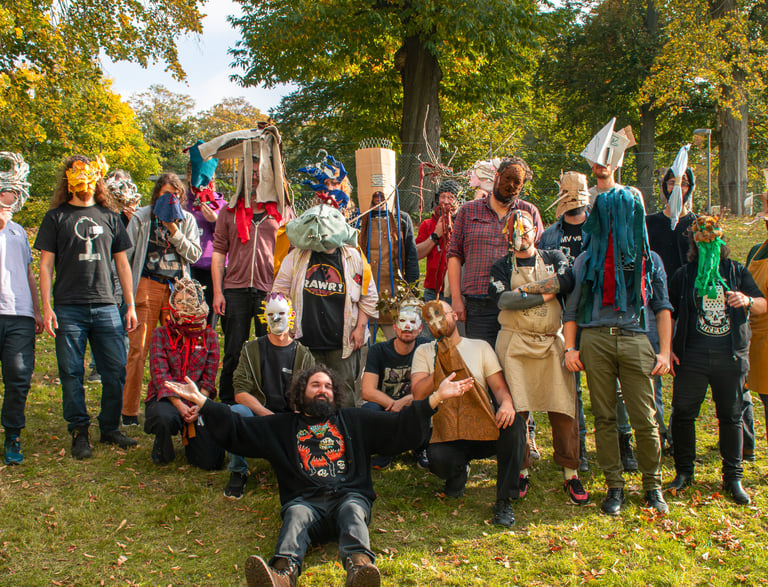
Collective Worldbuilding and Mask-Making Workshop
Purpose
This methodology combines storytelling, participatory worldbuilding and material creation. It supports identity exploration, intercultural dialogue and collective imagination.
Learning Objectives
Foster collaborative storytelling
Explore themes of culture, identity and tradition
Strengthen belonging and shared authorship
Encourage reflection on diversity and representation
Method Overview
Duration: 4–6 hours
Group size: 10–25 participants
Materials: Paper, markers, post-its, mask bases, sculpting or decorative materials
Phase 1 – Collective Worldbuilding
Participants contribute words, short stories, cultural references and symbolic elements. These inputs are collected visibly (on walls or boards).
Through facilitated discussion, the group:
Identifies recurring themes
Defines shared geography, cultures or traditions
Establishes values or tensions within the fictional world
All contributions are treated equally. The facilitator synthesises the material into a shared framework, ensuring inclusive representation.
Phase 2 – Mask Creation
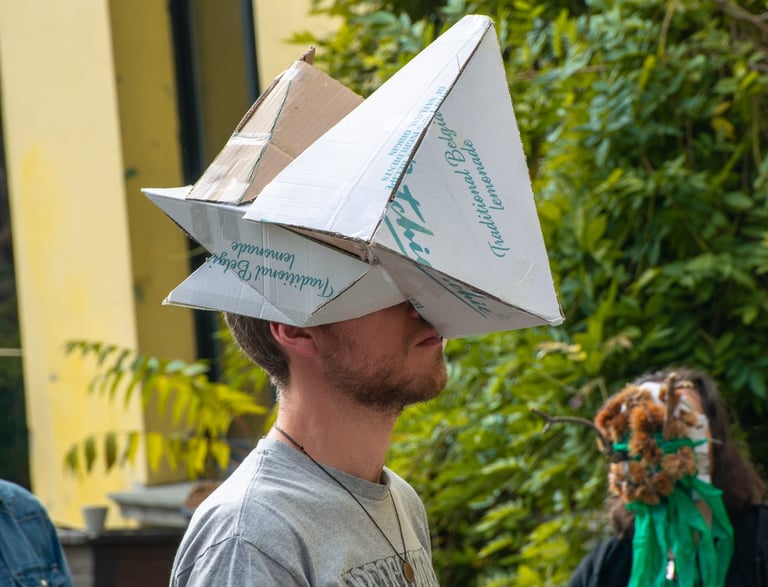
Each participant designs and creates a mask that represents a character from the collectively built world.
Participants reflect on:
Cultural identity within the fictional setting
Social roles and traditions
Visual symbolism
The final presentation includes a short performative or narrative moment where participants introduce their character.
Inclusion and Democratic Participation
This method:
Validates all contributions
Encourages participants to see their ideas reflected in a shared outcome
Provides both verbal and non-verbal entry points
Supports neurodivergent participants through structured creative steps
The shared world reduces competitive dynamics and fosters collective ownership.
Transferability
The workshop can be adapted to:
Museums and heritage institutions
Intercultural community programmes
Adult education and non-formal learning contexts
Artistic residencies
Materials can be low-cost and locally sourced.
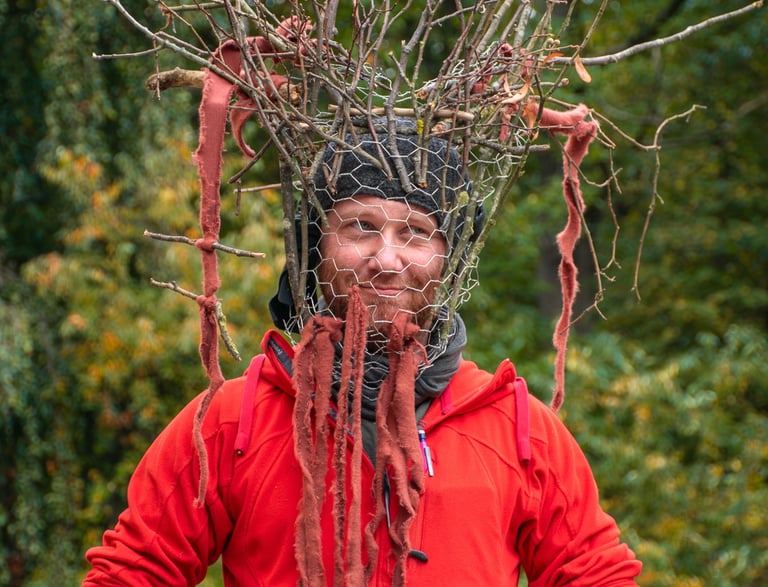
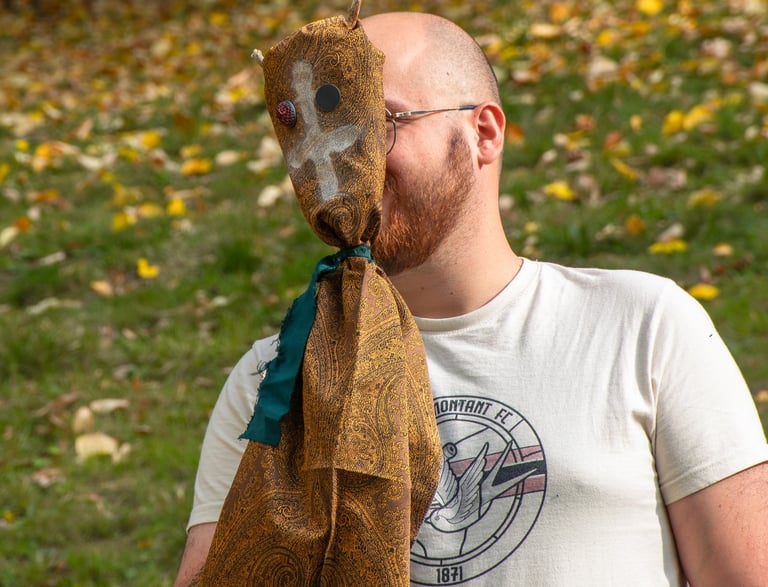
Rotational Collaborative Sculpting (“Musical Chairs Sculpting”)
Purpose
This rapid collaborative making exercise promotes experimentation, peer learning and reduced perfectionism. It is particularly effective in mixed-skill groups and inclusive creative settings.
Learning Objectives
Encourage experimentation and risk-taking
Reduce fear of failure and perfectionism
Foster peer-to-peer learning
Increase production within limited timeframes
Method Overview
Duration: 1.5–2 hours
Group size: 10–30 participants
Materials: Sculpting materials (clay, kitbashing materials, assemblage objects), music, tables
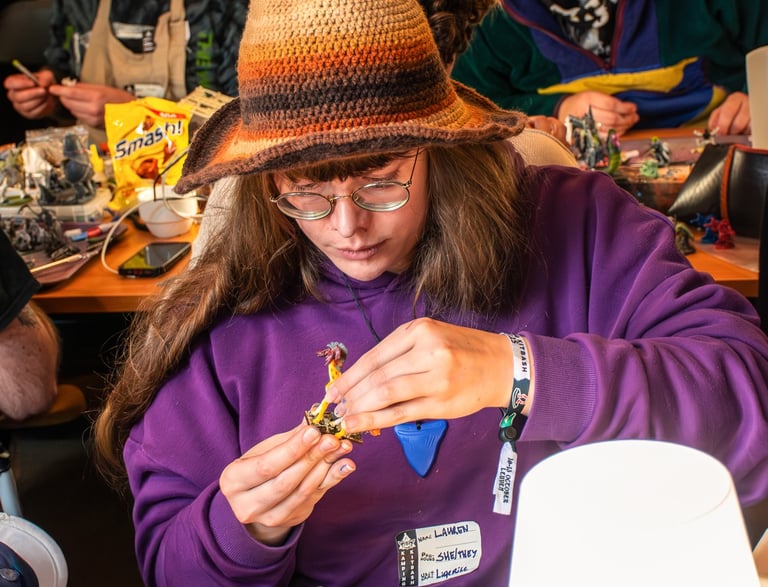
Participants begin working individually on a sculpture. Music plays during creation. When the music stops, participants rotate to the next sculpture and continue building on someone else’s work.
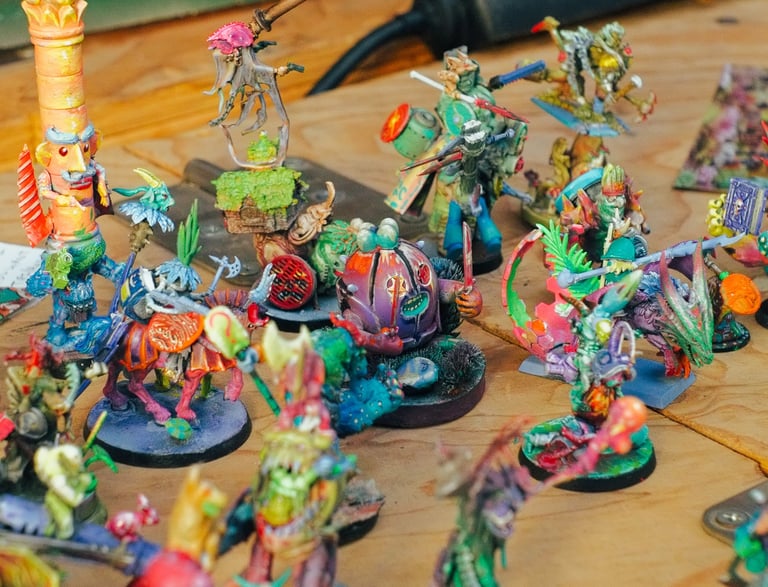
The rotation continues multiple times, resulting in collectively created pieces.
Facilitators intentionally place:
Experienced participants next to less experienced participants
Participants with different working styles together
In one session, this method resulted in 30 finished works in 2 hours.
Inclusion and Learning Impact
The rotational structure:
Removes ownership pressure
Disrupts perfectionism
Encourages learning by observation
Lowers entry barriers for beginners
Participants experience democratic co-creation: each work reflects multiple contributors.
The fast pace prevents overthinking and promotes embodied, intuitive learning.
Transferability
This method can be applied in:
Community arts centres
Adult education workshops
Inclusion-focused programmes
Museum or festival contexts
It requires minimal explanation and can be adapted to different artistic media (drawing, writing, textile, etc.).
weare@chosenbygoblins.com
© 2026. All rights reserved.
CHOSEN BY GOBLINS VZW
1021.183.039
Hertstraat 8
3080 Tervuren